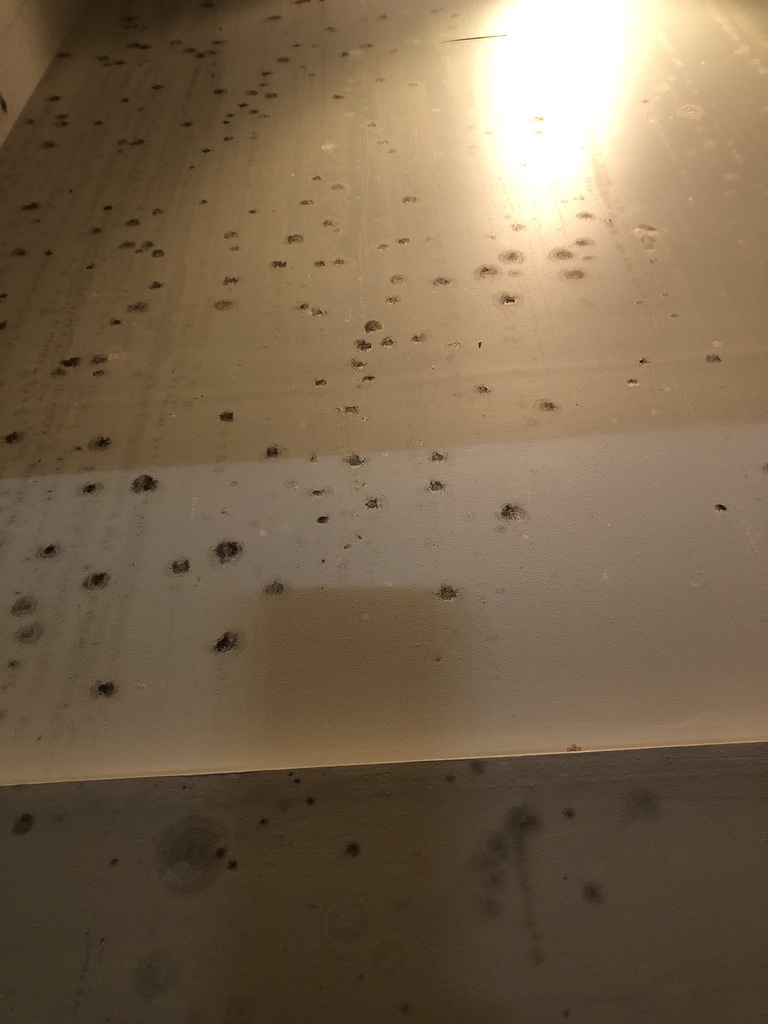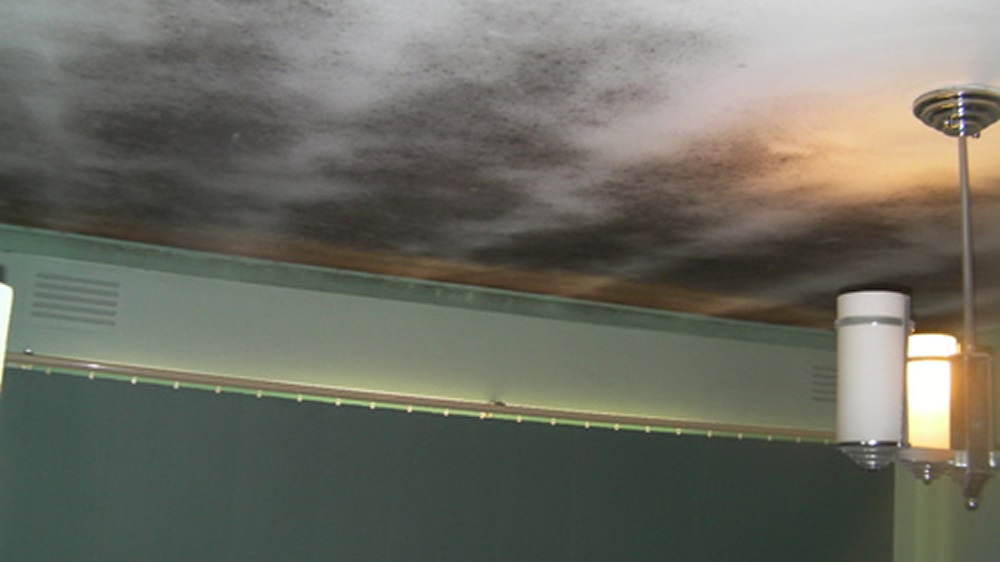
Black mould on ceiling plaster
There were up to 10 students living in this house and each ceiling of the two bedroom apartment was the same as this one. The students slept in shifts so the dwelling was never aired. Noone became sick from living in this apartment surrounded by all this mould.
MouldSOS supplies emergency services for mould remediation and control across Melbourne.
Click to call us HERE
All About Mould - If you cannot control mould and condensation yourself, then call MouldSOS now!
Mould can be dealt with by anyone. Often there is no need to call in a professional. The key to controlling mould is to control moisture in the built environment. In other words, manipulation of heat, air movement and ventilation will resolve any moisture issue - and from there, mould itself will be controlled and removed.
The way to stop mould growing is to vacuum and ventilate. Vacuuming (whether it is vacuuming the air using air purifiers or air scrubbers or vacuuming surfaces) will remove dust which includes mould spores. Ventilation will reduce the amount of moisture in the internal atmosphere of the dwelling, decreasing or eliminating mould presence.
HOW DO YOU KNOW IF MOULD IS PRESENT?
It is important to understand that mould is present in some form in every built environment - either as mould fungal growth or as mould spores (dust particulates). More importantly, people may suspect mould is present through sight or smell.
MOULD SPORES
Mould spores are minute particulates found in household dust and as such, removing dust will remove mould spores. This can be achieved by thorough vacuuming and wiping down of hard surfaces with a damp cloth. Curtains need to be vacuumed also. There are machines designed to erradicate airborne particulates from the indoor atmosphere called 'airscrubbers', but you will need to hire a mould professional to use these machines as they are too expensive to purchase for a once off issue. Air purifiers are smaller versions of the airscrubbers and these can be cheaply purchased but they are generally only useful for single rooms.
HOW TO STOP MOULD GROWTH
It is all about altering the internal atmosphere so that mould does not have a chance to grow in future. This will involve removing moisture from the internal environment. Be aware that preventative measures are the best deterrent to mould in the indoor environment and there are everyday simple actions you can take to prevent mould in your environment. Despite preventative measures, if you believe you have mould in your living environment - either through visual inspections or through issues with inhabitants experiencing adverse respiratory issues, then quick action should be undertaken.
DO YOU NEED A MOULD PROFESSIONAL?
Mould professionals are not always required if you wish to simply remove mild mould growth. If however, you wish to immediately erradicate mould spores and learn more about how to control mould, it may be advantageous to employ a reputable mould professional.
MYTHS ABOUT MOULD
The most common myth surrounding mould is that the presence of mould will always make you sick. In many (most) instances, this is simply not the case. The only study undertaken in the world regarding the impact of mould on humans was undertaken by the WHO. Their findings concluded that the presence of mould can lead to mild respiratory issues in some inhabitants. The critical issue with a dwelling which has mould present is the unbalanced internal environment which is allowing the mould to grow - namely excessive moisture. It is the ingestion of the moisture vapour trapped in the internal atmosphere which is more harmful to people's health.
CONNECTION BETWEEN MOULD AND MOISTURE
There is a direct causal link between mould and moisture. Without the presence of moisture, mould cannot grow. Controlling the presence of moisture in the living environment is therefore the MOST important issue when it comes to the control of household mould. There is a binding link between moisture and mould. Mould will only grow with the presence of moisture and a food source. Reducing and/or eliminating excessive moisture from the built environment will stop the onset of condensation and therefore halt mould generation overnight.
For more information please call us on 1300 382 826, or John on 0409 191 209 or Click to call us HERE.
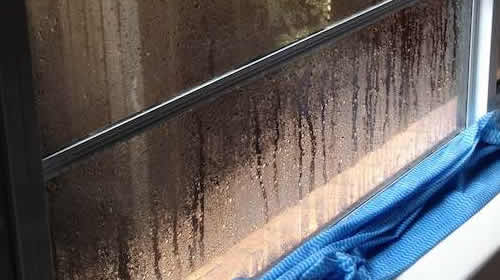
Condensation causes mould growth
If you reduce the moisture trapped in the internal environment, mould growth will stop.